Bali is famous for its beaches, temples, and festivals, but the island’s cultural heartbeat can be seen most vividly on the stage. When dancers move gracefully to the rhythms of gamelan, their stories are not told by gestures alone. The costumes they wear are equally powerful, carrying centuries of tradition, layers of meaning, and deep symbolism. Understanding the costumes of Balinese dance opens a new dimension to appreciating the island’s living heritage. But what hidden messages are woven into these colors, patterns, and accessories?
The Sacred Role of Costumes in Balinese Dance
In Balinese culture, a dance costume is never just a piece of clothing. Every element from fabric to headdress is infused with spiritual significance. Costumes connect the performer with the divine, transforming them from ordinary individuals into carriers of mythological characters, spirits, or ancestors.
During temple ceremonies, for example, costumes help create a sacred atmosphere, signaling that the performance is not only entertainment but also an offering to the gods. On cultural stages, the same costumes bring these traditions to life for audiences, allowing visitors to witness how spirituality and art are woven together in Bali’s daily life.
Colors and Patterns: Messages Woven in Fabric
Colors in Balinese dance costumes are chosen with great care, as each shade carries its own symbolic meaning. White represents purity and balance, red conveys strength and energy, while black is often linked to protection and the unseen spiritual world. Gold and yellow highlight divinity and prosperity, commonly used in dances performed to honor deities.
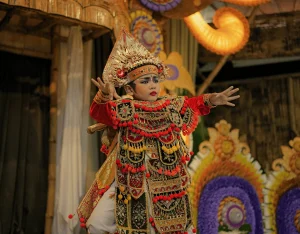
Patterns and textiles also carry messages. Songket, with its shimmering gold threads, often reflects nobility and sacredness, while batik motifs add layers of storytelling to fabric. Beyond the famous Barong and Rangda, many dances illustrate costume symbolism in unique ways:
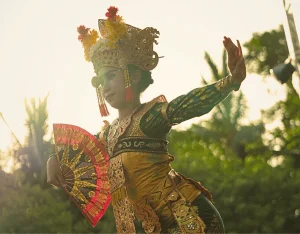
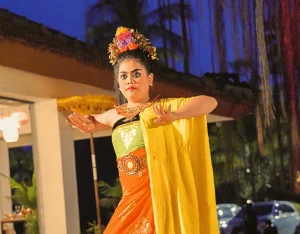
Legong dancers wear golden crowns and brightly colored attire, symbolizing elegance, refinement, and their royal origins.
Topeng (Mask Dance) combines patterned textiles with carved masks, portraying historical kings, mythical heroes, or comic figures.
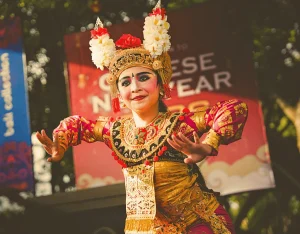
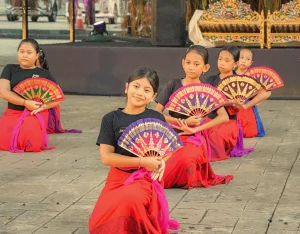
Pendet, a welcoming dance, is adorned with floral accessories and vibrant fabrics to symbolize hospitality and offerings of devotion.
Through colors and patterns, each costume becomes a visual script, guiding the audience to understand the story before a single step is performed.
Accessories and Character Representation
Beyond fabric and color, accessories play a vital role in defining characters. Headdresses crafted from gold leaf and flowers highlight divine beauty in dances like Legong, while towering headgear in Baris reveals the strength and discipline of warriors.
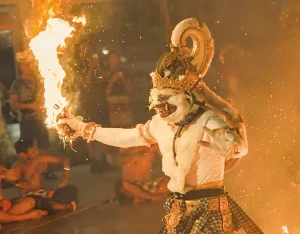
Masks, used in Topeng and Barong dances, are powerful tools that transform performers into living embodiments of mythical or spiritual figures. Props such as fans, spears, or ceremonial umbrellas further support storytelling, emphasizing emotions or sacred gestures. For audiences, these details act as cultural signposts, allowing them to instantly recognize characters and their roles within a performance.
Experiencing Costume Symbolism at Sawelas Nusantara
While books and photos can explain symbolism, nothing compares to seeing Balinese dance costumes come alive on stage. At Sawelas Nusantara, visitors experience authentic performances where every detail from golden headdress to patterned textile retains its traditional meaning. Guests can also join workshops, where they learn not only the dance movements but also the stories and symbols hidden in costumes.
📍 Visit us at Bali Collection, Jl. ITDC Nusa Dua Lot BC, Benoa, South Kuta, Badung, Bali.
📅 Check our event schedule to plan your visit and witness the beauty of Balinese dance costumes.
Experience the colors, patterns, and meanings firsthand at Sawelas Nusantara.