Bali is often described as timeless yet on this island, time itself is sacred. It moves not by the ticking of clocks but by the rhythm of prayers, offerings, and ceremonies that shape every breath of daily life. The Balinese measure their days through the Pawukon calendar, a 210 day cosmic cycle aligning human life with nature and the divine.
Each sunrise, temple bell, and dance performed under the stars follows this sacred rhythm a living harmony between culture and cosmos. What does it mean for a community to live by a calendar where every moment becomes a form of devotion?
The Structure of Pawukon: A Calendar Beyond Dates
The Pawukon calendar consists of 30 weeks, each with seven days forming a 210 day cycle that repeats endlessly. Unlike the linear concept of time found in the modern world, Pawukon embodies a cyclical philosophy: life moves in patterns, not straight lines.
Each week, or wuku, carries its own spiritual vibration. Priests, farmers, and artists consult these cycles to determine dewasa ayu the most auspicious days for ceremonies, planting, or performances. Some wuku bring energy and creation, while others invite rest and reflection.
Running alongside the Saka lunar calendar, the Pawukon forms the foundation of Bali’s ceremonial rhythm. It reminds the Balinese that time is not to be chased but honored a reflection of Tri Hita Karana, the balance between humanity, nature, and divinity.
Time and the Sacred: Rituals that Follow the Cosmic Flow
In Bali, time and ritual are inseparable. The island’s great festivals all find their rhythm within the Pawukon cycle.
During Galungan, the wuku Dunggulan marks the triumph of dharma (good) over adharma (evil). Ten days later, Kuningan celebrates gratitude as ancestral spirits return to heaven. Saraswati Day honors the goddess of knowledge and art, while Pagerwesi strengthens the spiritual armor that protects the soul.
Each festival represents a dialogue between humanity and the cosmos. Time in Bali is not a line to be measured, but a pulse to be felt a reminder that every ceremony, like every heartbeat, connects people to something greater than themselves.
The Calendar in Daily Life and Art
The influence of the Pawukon extends beyond temples and into every aspect of life. Farmers plant according to nature’s balance, families hold ceremonies in auspicious wuku, and artists time their rehearsals and performances to align with sacred energies. This harmony between time, creativity, and faith gives Balinese culture its unique vitality. The rhythm of life is not dictated by urgency, but by awareness by listening to the quiet conversation between the earth, the body, and the divine.
For the Balinese, this is not superstition but sensitivity a mindful understanding that everything in life has its moment, its pulse, its place in the greater cycle.
Living in Harmony with Time at Sawelas Nusantara
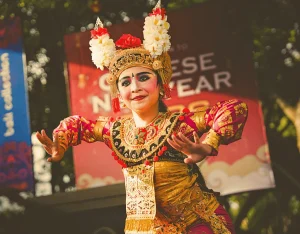
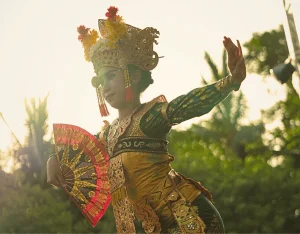
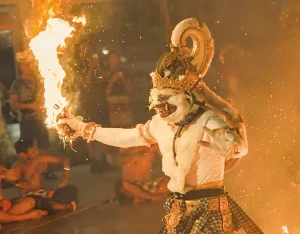
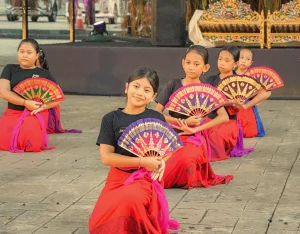
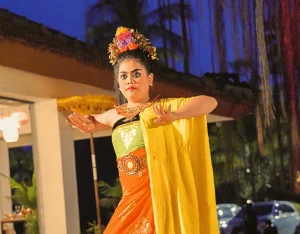
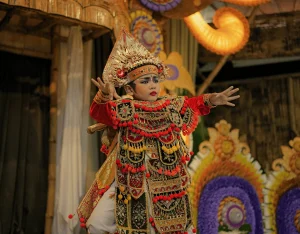
At Sawelas Nusantara in Nusa Dua, this ancient rhythm continues to flow through every performance. Each show is inspired by the cycles of the Pawukon from purification near Melasti, to renewal before Galungan, to devotion during Saraswati Day.
Here, dance and music mirror the rhythm of time repeating, renewing, and resonating with the island’s cultural heartbeat. Performers and visitors alike become part of this continuum, where art, faith, and the cosmos move together in perfect balance.
📍 Visit us at Sawelas Nusantara at Bali Collection, Jl. ITDC Nusa Dua Lot BC, Benoa, South Kuta, Badung, Bali.
📅 Check our Event Schedule and discover performances that follow Bali’s cosmic rhythm where culture, nature, and devotion flow as one.
Every performance becomes a moment in Bali’s timeless cycle where art keeps harmony alive through the rhythm of the universe.