Morning light spills gently across temple walls as the scent of incense fills the air. A woman kneels before her doorway, placing a small canang sari a woven palm leaf offering filled with flowers on the ground. Her eyes close for a brief moment; her hands press together in prayer. Then she smiles calm, content, complete.
This quiet act of gratitude is repeated thousands of times every morning across Bali. Here, thankfulness is not spoken but lived expressed through ritual, art, and mindful action. But what does it mean to live in gratitude every day, and how has Bali turned this simple virtue into the rhythm of life itself?
The Philosophy of Gratitude in Balinese Culture
In Balinese culture, gratitude is not a reaction to happiness it is the source of it. To be grateful is to be in harmony with existence. Guided by Tri Hita Karana, the philosophy of threefold balance, the Balinese express gratitude through relationships with God (parahyangan), with others (pawongan), and with nature (palemahan).
This balance creates peace in everyday life. A smile to a neighbor, a gesture of respect to an elder, or a whispered prayer as the sun rises, are all forms of gratitude, gratitude that binds the visible and invisible worlds. Gratitude is not reserved for grand blessings, but for the simple grace of being alive. Through this daily awareness, Bali turns spiritual philosophy into lived experience.
The Daily Offering of Appreciation
The most visible expression of gratitude in Bali is the humble canang sari.
Made from palm leaves, colorful flowers, and a small amount of rice, each offering carries deep symbolism:
• White flowers for purity,
• Red for courage,
• Yellow for prosperity,
• Green for balance.
Every family prepares and places canang in front of their homes, temples, and even workplaces. It is a gift to the divine and a reminder of harmony with the world.
To offer canang sari is to say, “thank you” to God for life, to the earth for abundance, and to one’s community for companionship. Each small basket may wither by sunset, but the act of giving renews the heart every day.
Gratitude in Rituals, Arts, and Daily Gestures
From temple ceremonies to quiet prayers, gratitude shapes every layer of Balinese life. Festivals like Odalan, Galungan, and Saraswati are not merely celebrations they are acts of thanksgiving for divine blessings.
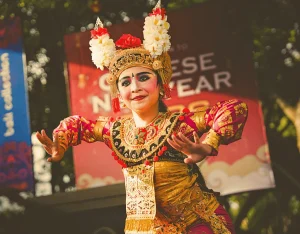
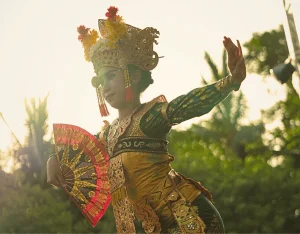
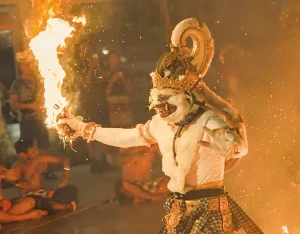
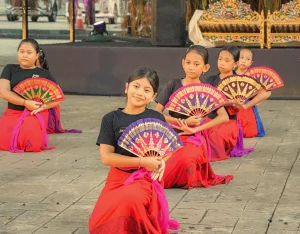
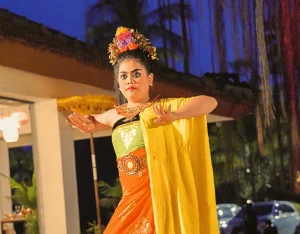
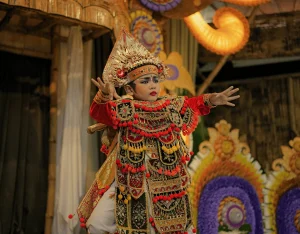
In art, gratitude finds expression through motion and sound. The gentle sway of a dancer’s hands, the soft hum of gamelan, the serene rhythm of collective preparation all mirror the feeling of thankfulness. Even in hospitality, the Balinese tradition of ngeunah in making others feel at ease is seen as a form of gratitude toward human connection.
Perhaps this is why Bali, despite its rapid modern growth, retains its calm soul. Gratitude keeps the island balanced, reminding its people that peace begins with appreciation.
Gratitude in Motion at Sawelas Nusantara
At Sawelas Nusantara, this living spirit of gratitude finds its artistic form. Through dances like Puspanjali, Pendet, and Sekar Jepun, Sawelas celebrates the Balinese way of giving thanks not through words, but through movement. Each performance begins as a prayer, unfolding in gestures that reflect reverence for life and the divine.
Visitors watching a Sawelas performance often feel more than admiration they feel calm, connected, and inspired. The dancers’ smiles, the gentle rhythm of gamelan, the harmony of colors and motion all evoke the quiet beauty of a heart that knows gratitude.
📍 Visit Sawelas Nusantara at Bali Collection, Jl. ITDC Nusa Dua Lot BC, Benoa, South Kuta, Badung, Bali.
📅 Check our Event Schedule and Experience how gratitude becomes art a graceful expression of Bali’s spiritual warmth.
Let each movement at Sawelas remind you that gratitude is not a thought it is a way of living.