In Bali, every gesture carries memory. Every step, turn, and delicate flick of the wrist holds centuries of inherited wisdom. Ritual movement is not created for display, but for connection a bridge between humans, nature, and the divine. But what ancient knowledge lives within these gestures, and how do they continue to guide Balinese life today?
Where Ritual Movements Begin
Long before Balinese dance became known worldwide, the island’s ritual movements were shaped by deep spiritual foundations. They emerged from Hindu Bali cosmology, ancestral practices, and a worldview that sees the universe as a living, breathing entity. For the Balinese, movement itself is prayer.
Ritual gestures are believed to call energy, balance space, and offer devotion to the divine. Life cycle ceremonies birth, adulthood, marriage, purification, and even death all include movements that carry meaning beyond words.
These motions are not meant to entertain. They align the body with sacred intention, reminding performers and communities of their place within the cosmic order.
The Symbolism Behind Sacred Gestures
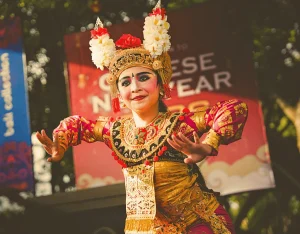
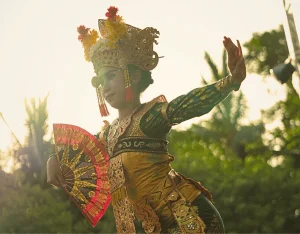
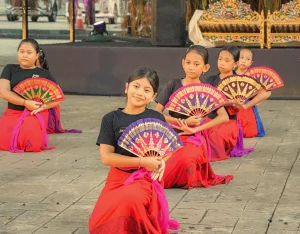
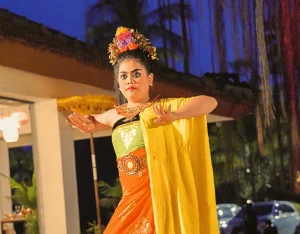
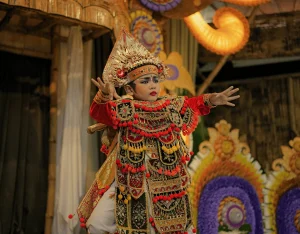
The symbolism behind Balinese ritual movement is carried through a variety of gestures and expressions that hold deep spiritual meaning. Hand gestures known as mudra communicate offering, protection, welcome, or purification. Body posture expresses grounding, humility, strength, or openness to blessing. Eye movements (seledet) symbolize heightened awareness and the presence of the soul. Even the steps and rhythms mirror natural cycles such as the movement of waves, the flow of wind, and the steady growth found in nature.
Together, these symbolic elements transform each movement into a visual prayer sincere, intentional, and filled with meaning.
Ritual Movements in Ceremonies and Daily Life
Sacred movement in Bali is not limited to grand temple rituals it flows through everyday life.
The simple act of placing canang sari bending down, offering flowers, lighting incense is itself a series of ritual gestures expressing gratitude and respect. Many movements in classical Balinese dance descend directly from these ritual motions. This is why the dances feel deeply spiritual they are rooted in prayer.
Balinese society practices a form of movement mindfulness, where even everyday gestures greeting elders, handling offerings, cleaning sacred spaces are carried out with intention and awareness.
In this way, ritual movement becomes a universal cultural language of devotion, balance, and presence.
Sacred Movements on Stage at Sawelas Nusantara
At Sawelas Nusantara, the timeless wisdom of Balinese ritual movements finds a vibrant place in the modern world.
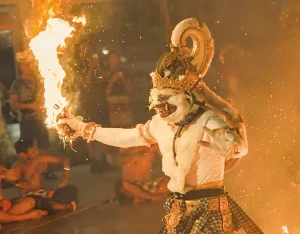
Each performance carries elements of sacred gesture from body orientation, to the direction of the dancer’s gaze, to the symbolic flow of the hands. The dancers do not simply execute choreography they carry tradition.
Their movements embody welcome, purification, blessing, and reverence reflecting values found in temple rituals and ancestral ceremonies. The rhythm of gamelan, the grace of each gesture, and the harmony of coordinated movement allow audiences to feel the spiritual depth behind the performance.
Sawelas Nusantara becomes a bridge between sacred tradition and contemporary appreciation, ensuring the ancient language of Balinese movement continues to be felt by people from around the world.
📍 Visit us at Bali Collection, Jl. ITDC Nusa Dua Lot BC, Benoa, South Kuta, Badung, Bali.
📅 Check our Event Schedule and Experience the timeless wisdom of Bali through movements that carry devotion, harmony, and sacred meaning.
In every sacred gesture, Bali teaches that meaning begins where movement becomes mindful.