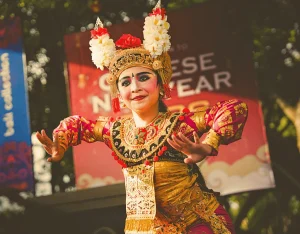
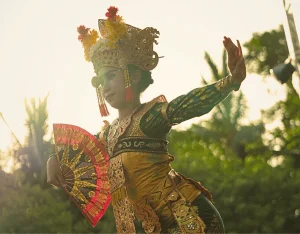
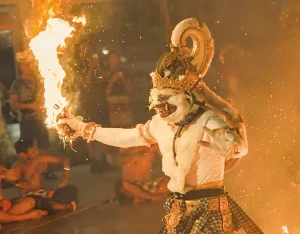
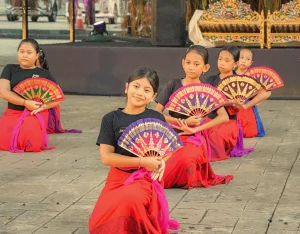
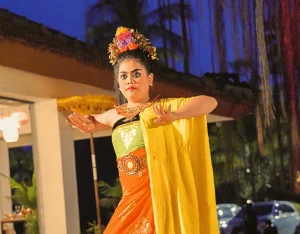
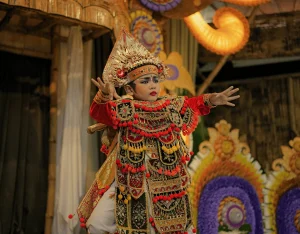
In many dance traditions, movement takes the lead while music follows. In Bali, the relationship is beautifully different. Here, music does not simply accompany the dance it guides it. Rhythm becomes the language that directs every gesture, expression, and shift of energy on stage. To truly understand Balinese performance, one must first understand how music leads movement. But how does rhythm shape the life of a dance in Bali?
Music as the Guiding Force of Movement
In Balinese performances, music sets the direction before the body responds. The sound of gamelan, the beat of kendang, or the flowing tones of rindik signal how a dancer should move, pause, or transform. These sounds carry cues that dancers listen to closely, allowing movement to emerge naturally from rhythm.
Rather than following fixed counts, dancers feel the music internally. A sudden change in tempo can sharpen movements, while slower rhythms invite controlled, grounded gestures. This deep listening creates a performance that feels alive responsive to sound rather than restricted by choreography.
The Silent Conversation Between Musicians and Dancers
Balinese performance is built on trust and communication. Musicians and dancers engage in a continuous, silent conversation throughout the performance. A drummer may signal a transition, and the dancer responds instantly. The music breathes, and the body answers.
This relationship requires years of training and sensitivity. Dancers learn not only technique, but awareness how to read sound, anticipate change, and move in harmony with the ensemble. The result is a performance where music and movement feel inseparable, each shaping the other in real time.
How Rhythm Shapes Emotion and Storytelling
Rhythm in Balinese performance does more than guide movement it shapes emotion and narrative. Fast, energetic rhythms can express tension, excitement, or power. Slower, flowing sounds create moments of calm, grace, or reflection. Through rhythm, the audience is guided emotionally, even without understanding the story being told.
This emotional guidance allows performances to communicate intuitively. Viewers feel when a moment intensifies or softens, sensing transitions before they appear visually. Rhythm becomes the storyteller, leading both dancer and audience through the experience.
Why Live Rhythm Feels Different
Experiencing rhythm live changes everything. The vibration of sound, the shared silence between beats, and the collective attention in the space create a sense of presence that cannot be replicated through recordings. Live rhythm invites the body to respond to breathe, to feel, to connect.
For many visitors, this is when Balinese performance truly comes alive. Music is not something to listen to passively; it is something that surrounds and moves you, drawing you deeper into the moment.
Experiencing the Dialogue at Sawelas Nusantara
At Sawelas Nusantara, the relationship between music and movement is central to every performance. Visitors can witness how musicians and dancers respond to one another, creating harmony through rhythm and gesture. Each show highlights this dialogue, allowing audiences to feel how music leads the dance from beginning to end.
Beyond performances, Sawelas offers opportunities to experience rhythm more directly through cultural classes, including rindik music sessions. These experiences help visitors understand that Balinese performance begins with listening feeling the rhythm before the movement unfolds.
In Bali, music does not follow the dance. It invites it. And when rhythm leads, movement becomes a living response one that connects sound, body, and emotion into a single cultural expression.
📍 Visit us at Bali Collection, Jl. ITDC Nusa Dua Lot BC, Benoa, South Kuta, Badung, Bali
📅 Check our Event Schedule and experience performances and cultural classes where rhythm guides movement and meaning.
When music leads, movement becomes a living response.