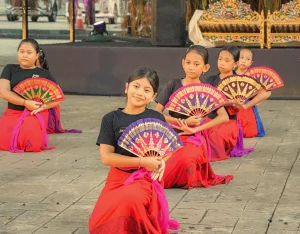
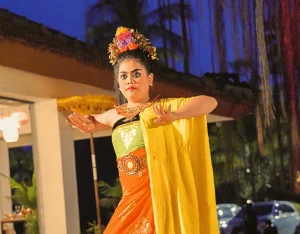
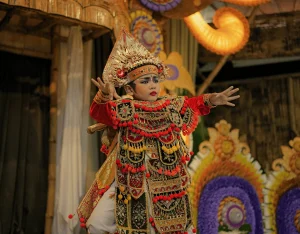
Stories do not always need words to be understood. In Bali, many of the island’s most meaningful stories are told through movement and sound through the precise gestures of dance and the layered rhythms of traditional music. These performances do more than entertain they carry memory, values, and emotion from one generation to the next. How do traditional dance and music in Bali become a form of cultural storytelling that speaks beyond language?
Storytelling Beyond Words
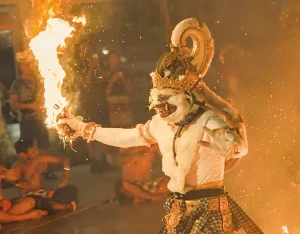
In Balinese culture, storytelling is embodied. Instead of spoken narratives, stories unfold through posture, expression, timing, and rhythm. A lifted hand, a focused gaze, or a sudden change in tempo can signal tension, devotion, joy, or transformation. For audiences, understanding does not come from translation, but from feeling.
This non-verbal storytelling allows Balinese arts to communicate across cultures. Visitors may not know the myths or contexts behind a performance, yet they often feel the emotion and intention being shared. In this way, dance and music become a universal language one that connects through the senses.
Dance as a Living Narrative
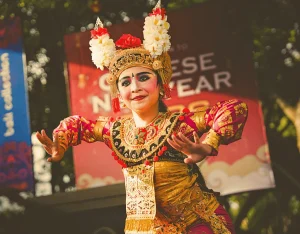
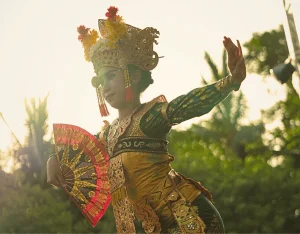
Balinese dance functions as a living narrative shaped by tradition and practice. Movements are not decorative they are intentional. Each gesture carries meaning rooted in cultural values such as balance, respect, and harmony. Through repetition and discipline, dancers learn to embody these values, allowing the story to be expressed through the body.
What makes this storytelling powerful is its subtlety. Rather than presenting a clear beginning and end, the narrative unfolds gradually, inviting the audience to engage emotionally. The story is not explained it is experienced. This openness allows each viewer to connect personally, guided by feeling rather than instruction.
Music as Emotional Guidance
If dance carries the story, music guides the emotion. Traditional ensembles such as gamelan and rindik shape the atmosphere of a performance, directing attention and mood. Changes in rhythm and intensity function like chapters within a story building anticipation, offering reflection, or signaling resolution.
Musicians and dancers move together in close awareness, responding to one another in real time. This relationship allows storytelling to remain fluid and alive. The music does not simply accompany the dance it leads the emotional journey, helping audiences feel when the story shifts even before movement changes.
Stories Shared Through Dance and Music at Sawelas Nusantara
At Sawelas Nusantara, traditional dance and music are shared as living stories. Performances are curated to highlight the relationship between movement and sound, allowing audiences to experience how narratives unfold through rhythm and gesture. Visitors are invited to listen, observe, and feel the story as it develops.
Beyond performances, Sawelas offers cultural workshops and classes that reveal storytelling from within. By engaging directly with movement and music, participants gain insight into how stories are carried through practice and presence. These experiences deepen understanding, turning observation into connection.
Traditional dance and music in Bali remind us that stories do not always need to be spoken. When rhythm guides movement and emotion leads understanding, culture tells its story naturally through experience.
📍 Visit us at Bali Collection, Jl. ITDC Nusa Dua Lot BC, Benoa, South Kuta, Badung, Bali
📅 Check our Event Schedule and discover performances where Balinese stories unfold through rhythm, movement, and sound.
In Bali, culture tells its stories through movement, rhythm, and feeling.