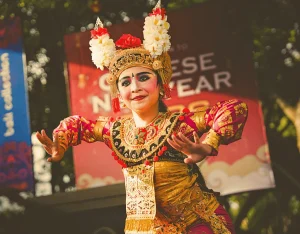
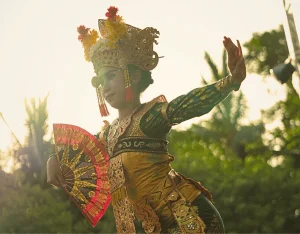
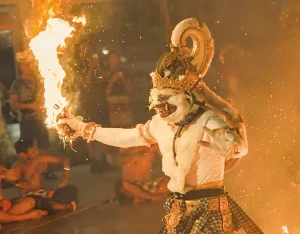
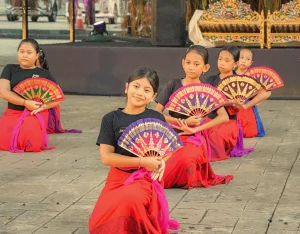
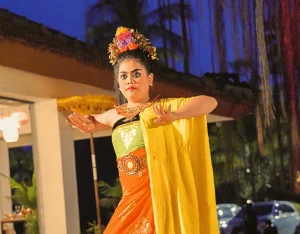
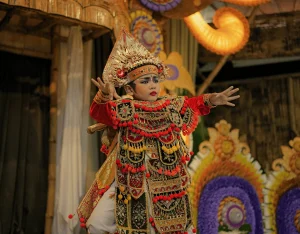
In Bali, traditional arts are born in sacred spaces. They begin within temples, rituals, and communal obligations shaped by devotion, timing, and responsibility. Over time, these same arts may appear in public venues, cultural gatherings, and shared spaces where audiences from around the world are present.
This movement from ritual to public space is often misunderstood as change or loss. Yet the journey of Balinese arts tells a different story one of continuity carried across settings. How do traditional arts move across spaces without losing their meaning, and what responsibilities come with sharing them beyond their sacred origins?
From Ritual Obligation to Public Presence
Balinese arts originate as part of spiritual duty. Dance and music are performed not for visibility, but as offerings responses to sacred time and communal responsibility. In these contexts, space is defined by ritual, and participation is guided by belief rather than choice.
As these arts move into more public environments, their setting changes, but their foundations remain. Performances may take place in open courtyards, cultural centers, or shared venues, allowing broader audiences to witness them. This shift is not about transforming ritual into entertainment, but about extending cultural presence into spaces of encounter. The transition reflects a change in location, not intention.
Shifting Spaces Without Shifting Values
What allows Balinese arts to move across spaces is a strong cultural framework. Values such as discipline, respect, and collective responsibility travel with the art, regardless of where it is performed.
Movements remain rooted in tradition, music follows established structures, and preparation continues to honor cultural context. Even when shared publicly, the arts carry traces of their sacred beginnings visible in how performers prepare, move, and approach the act itself. Space may evolve, but meaning remains intact.
Ethics and Responsibility in Cultural Sharing
Sharing traditional arts globally brings opportunity, but also responsibility. Cultural visibility must be accompanied by cultural awareness. Without context, performances risk being reduced to spectacle rather than understood as expressions shaped by history and belief.
Ethical cultural sharing requires care respecting origins, acknowledging purpose, and maintaining boundaries between what is sacred and what is shared. Not all elements are meant to travel freely, and understanding this distinction is central to responsible cultural exchange. In tourism contexts, this awareness allows visitors to engage with culture respectfully, appreciating not only what is seen, but why it exists.
Bridging Sacred Roots and Cultural Exchange at Sawelas Nusantara
Sawelas Nusantara reflects this thoughtful transition between sacred obligation and cultural sharing. As a cultural space, Sawelas approaches performances as encounters grounded in respect rather than display.
Here, traditional arts are shared with attention to context. Performances are framed within their cultural background, workshops emphasize understanding alongside participation, and programs are curated to honor the values carried from ritual spaces. By acting as a bridge rather than a stage, Sawelas demonstrates how arts can move across spacesconnecting sacred roots with global audiences without compromising meaning.
📍 Visit us at Bali Collection, Jl. ITDC Nusa Dua Lot BC, Benoa, South Kuta, Badung, Bali
📅 Check our Event Schedule and discover Balinese arts shared with respect, context, and cultural care.
Culture travels best when its roots are honored.