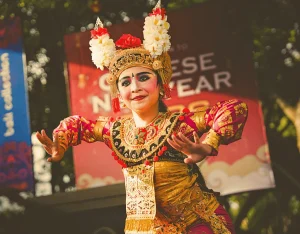
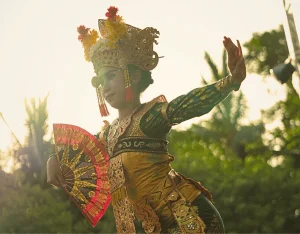
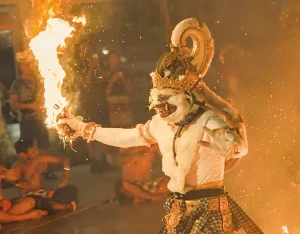
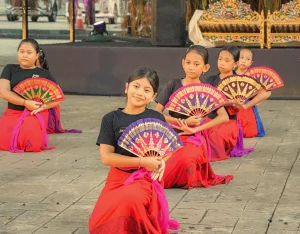
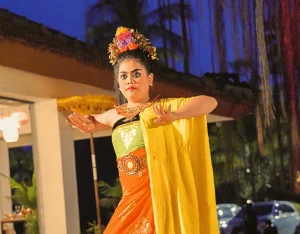
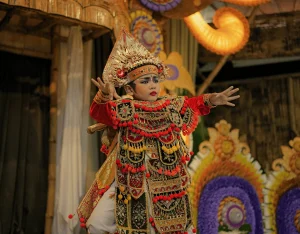
In Bali, time is not measured only by dates or seasons. It is shaped by cycles days marked by ritual, remembrance, and spiritual transition. Within this rhythm, traditional arts do not simply appear; they emerge in response to sacred moments that guide when, how, and why they are performed.
Dance and music follow this spiritual flow, aligning movement and sound with ritual time rather than personal schedules. Why is understanding it essential to understanding Balinese culture itself? Find out with Sawelas Nusantara!
Time as a Cultural Framework in Balinese Arts
Balinese traditional arts are closely connected to the island’s spiritual calendar, including cycles such as Pawukon, Odalan, Galungan Kuningan, and Nyepi. These calendars do more than mark religious events they structure cultural life.
Certain periods call for heightened artistic activity, with frequent rehearsals, ceremonies, and performances. Other times invite restraint, reflection, or silence. Artistic expression expands and contracts in harmony with spiritual obligations, creating a living rhythm shaped by time rather than convenience. In this framework, art is not scheduled freely it is summoned by sacred necessity.
Ritual Cycles and the Intensity of Expression
The spiritual calendar determines not only when arts are performed, but how they are expressed. During ceremonial periods such as temple anniversaries or major festivals, performances often carry greater physical and emotional intensity.
Movements become more deliberate, music more immersive, and preparation more rigorous. Dancers and musicians commit themselves fully to ritual time, understanding that performance is part of a larger offering. In contrast, quieter periods allow space for rest, reflection, and internal balance. Intensity in Balinese arts is never constant it responds to the spiritual weight of time itself.
Arts as Response, Not Entertainment
Within Balinese cultural philosophy, traditional arts are not independent activities. They respond to spiritual cycles that guide communal life. Dance and music are created with time, not placed onto it.
This understanding distinguishes Balinese arts from entertainment based scheduling. Performances are meaningful because they are timely aligned with moments of prayer, gratitude, renewal, or stillness. Silence, too, becomes part of artistic expression, especially during reflective periods such as Nyepi. Art becomes a dialogue with time listening, responding, and aligning with the unseen rhythm of spiritual life.
Aligning Cultural Expression at Sawelas Nusantara
At Sawelas Nusantara offers a space where traditional arts are presented with awareness of their cultural and spiritual timing. Rather than treating performances as fixed entertainment schedules, Sawelas emphasizes alignment respecting the rhythms that give Balinese arts their meaning.
Through curated performances, workshops, and cultural programs, Sawelas helps audiences understand that what they witness is shaped by when it is performed. This approach allows visitors especially international audiences o encounter Balinese arts as expressions born from sacred cycles rather than standalone spectacles.
By bridging cultural context and contemporary sharing, Sawelas creates space for appreciation that honors time, tradition, and intention.
📍 Visit us at Bali Collection, Jl. ITDC Nusa Dua Lot BC, Benoa, South Kuta, Badung, Bali
📅 Check our Event Schedule and explore Balinese arts aligned with the island’s spiritual rhythm.
In Bali, art moves in harmony with sacred time.