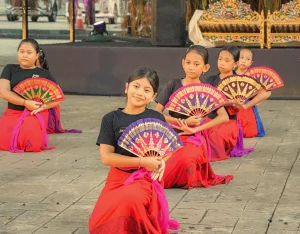
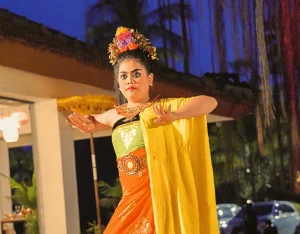
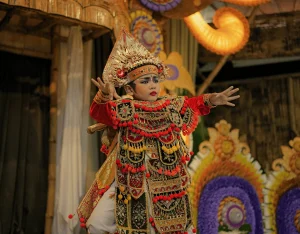
In Bali, learning does not always begin in classrooms. Much of it unfolds in open community halls, temple courtyards, and local studios where children sit beside elders watching, listening, and gradually joining in. Cultural activities become more than artistic practice; they become pathways of transmission. How do these shared activities allow knowledge, values, and responsibility to move naturally from one generation to the next?
Learning Through Practice, Not Theory
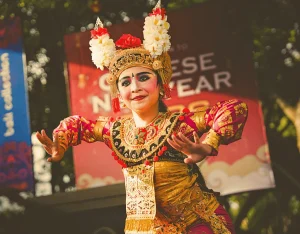
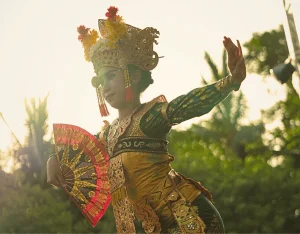
Balinese cultural education is rooted in participation. Children rarely begin with written manuals or formal lectures. Instead, they observe rehearsals, follow movements, and repeat patterns until understanding becomes embodied. Dance steps are refined through gentle correction by senior performers, and musical timing is learned by playing alongside experienced musicians.
This method strengthens not only technical skill but also discipline, patience, and attentiveness qualities that extend far beyond artistic practice.
Banjar and Sanggar as Living Classrooms
Community structures such as the banjar (local neighborhood association) and sanggar (art studio) function as informal educational spaces. These environments gather children, teenagers, adults, and elders within the same setting, creating daily opportunities for exchange.
Regular rehearsals become moments of interaction across age groups. Seniors guide without distancing themselves, while younger participants learn without rigid formal barriers. This atmosphere ensures that tradition remains accessible, relational, and deeply woven into the fabric of daily life.
Arts as a Bridge Between Generations
Cultural activities also strengthen emotional bonds. When children rehearse traditional dances or practice music with older mentors, relationships develop through collaboration. Respect grows naturally, shaped by a shared rhythm and common goals.
This intergenerational dynamic prevents cultural gaps. Instead of existing in parallel worlds, younger and older community members remain connected through common practice. Art becomes a bridge between memory and possibility, linking experience with curiosity.
Sawelas Nusantara: A Space for Shared Learning
At Sawelas Nusantara, reflects this model of intergenerational learning in Nusa Dua. Through dance classes for children, routine rehearsals, and programs that bring together younger participants and senior practitioners, Sawelas functions as a community centered learning space.
Here, cultural education is approachable and family friendly. Children gain confidence through guided practice, while experienced artists continue to mentor and participate. By encouraging collaboration across ages, Sawelas supports the natural transmission of knowledge that defines Balinese cultural continuity.
📍 Visit us at Bali Collection, Jl. ITDC Nusa Dua Lot BC, Benoa, South Kuta, Badung, Bali
📅 Check our Event Schedule and experience cultural classes and programs designed for families and learners of all ages.
When generations learn together, culture continues with strength and warmth.