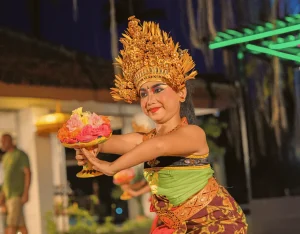
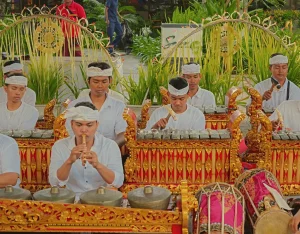
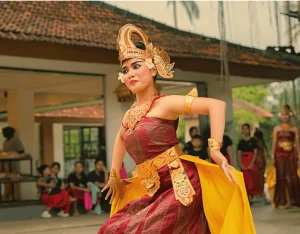
In 2026, technology continues to redefine how we communicate, learn, and experience the world. Artificial intelligence curates our content, short form videos shape our attention spans, and global audiences are connected instantly through digital platforms. In this fast-moving landscape, many traditional art forms face the challenge of staying relevant. Yet in Bali, traditional dance and music are not fading into the background; they remain vibrant, practiced, and deeply embedded in daily life. What is it about the Balinese approach to culture that allows ancient traditions to not only survive, but thrive, alongside the rapid pace of the digital age?
Tradition as Daily Practice
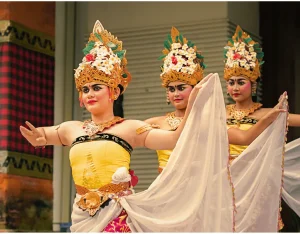
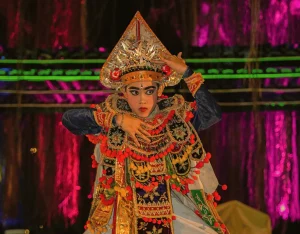
Balinese arts have never functioned solely as staged entertainment. Dances such as Legong and Barong continue to be performed in temples, ceremonies, and community gatherings as part of religious devotion and social responsibility. Because these traditions are practiced regularly within the heart of the community, they are sustained organically.
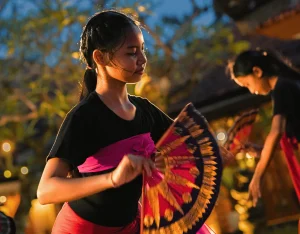
Children grow up watching rehearsals, and teenagers participate in performances as a natural rite of passage. This continuity ensures that the arts remain lived experiences rather than archived heritage, proving that culture survives best when it is practiced collectively.
Digital Platforms as Amplifiers
Rather than competing with tradition, digital platforms in 2026 often serve as powerful amplifiers. Performances are documented, workshops are shared online, and young artists use social media to showcase their dedication to their craft. Technology increases global visibility and sparks curiosity among international audiences. However, screens cannot replace embodied experience.
The resonance of live gamelan and the discipline behind each hand gesture still require physical presence. This balance between online visibility and offline authenticity strengthens traditional arts, using digital tools to invite the world into a real-world cultural dialogue.
Intimate Cultural Spaces in a Modern Setting
Another reason traditional arts thrive today is the growth of intentional, community led cultural venues. Instead of relying solely on massive productions, these “micro spaces” offer consistent platforms for practice and presentation, allowing audiences to experience performances up close.
These initiatives demonstrate that tradition can remain rooted while adapting to contemporary environments. By providing accessible performances and interactive learning, these spaces ensure that cultural continuity becomes a visible, breathing part of everyday life, even in the most modern districts.
Finding the Balance at Sawelas Nusantara
At Sawelas Nusantara, reflects this evolving model of cultural resilience in Nusa Dua. By presenting traditional Balinese arts within a contemporary setting and offering workshops that encourage direct participation, Sawelas bridges the gap between ancient heritage and the modern visitor. Here, tradition is neither a static relic nor a digital imitation; it is a dynamic, living practice.
By inviting guests to step away from their screens and engage with the rhythm of the gamelan and the grace of the dance, Sawelas proves that in 2026, the most meaningful connections are still the ones made in person, rooted in respect and shared understanding.
📍 Visit us at Bali Collection, Jl. ITDC Nusa Dua Lot BC, Benoa, South Kuta, Badung, Bali
📅 Check our Event Schedule and discover regular cultural performances that connect tradition with today’s world.
In 2026, Bali shows that tradition does not disappear in the digital age; it grows with intention.