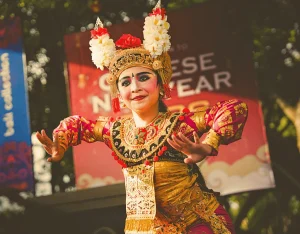
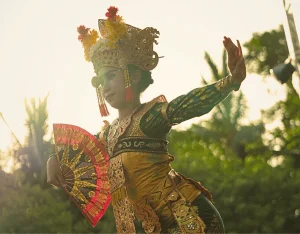
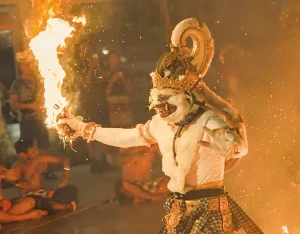
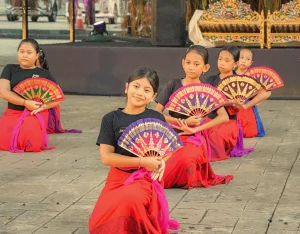
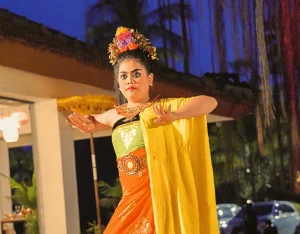
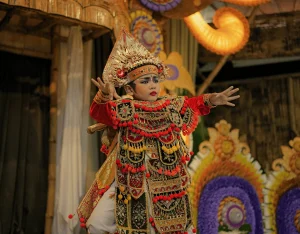
Bali’s dances are more than performances they are living expressions of faith, beauty, and community. Each movement, rhythm, and gesture carries traces of the island’s spiritual history and artistic evolution. From sacred temple rituals to international stages, Balinese dance has continuously adapted while preserving its soul. How did this timeless art form evolve through centuries of devotion and creativity?
From Sacred Beginnings: The Ritual Roots of Balinese Dance
The earliest Balinese dances were not created for entertainment, but for communication with the divine. Movements were prayers, and dancers served as intermediaries between the human and spiritual worlds. In village temples, ritual dances such as Rejang, Sanghyang Dedari, and Baris Gedewere performed as acts of offering and protection.
Each gesture held deep symbolism hands lifted to invite blessings, eyes shifting to follow unseen spirits, and bodies swaying in harmony with the gamelan’s rhythm. These ancient performances embody Bali’s spiritual foundation, where art and worship are one and the same.
Royal Courts and the Rise of Classical Elegance
As Balinese kingdoms flourished between the 16th and 19th centuries, dance evolved into an art of refinement and prestige. Royal courts became creative centers that nurtured highly stylized forms such as Legong, Gambuh, and Topeng Pajegan.
Here, precision and grace defined beauty. Young girls were trained to perfect every movement of Legong its delicate gestures and controlled expressions representing both discipline and devotion. Meanwhile, Topeng masked dances blended storytelling and spirituality, weaving together humor, history, and ritual.
These classical styles reflected a sophisticated vision of Balinese aesthetics graceful, intricate, and deeply symbolic laying the foundation for the island’s artistic identity known across the world today.
From Temples to Global Stages: The Modern Transformation
In the 20th century, Balinese dance entered a new era. While sacred performances continued in temples, other dances began reaching wider audiences. Cultural figures like I Wayan Limbak and German artist Walter Spies developed Kecak, transforming ritual chanting into one of Bali’s most iconic spectacles.
Similarly, Pendet once used as an offering dance in temples evolved into a welcoming performance for guests, symbolizing hospitality and cultural pride. These transformations did not dilute their meaning; rather, they revealed the flexibility of Balinese tradition to adapt and communicate with the modern world.
Today, Balinese dance thrives both in ceremonies and on international stages, captivating audiences with its blend of rhythm, spirituality, and theatricality. It stands as living proof that true tradition does not resist change it evolves with purpose.
Preserving the Living Tradition at Sawelas Nusantara
At Sawelas Nusantara, the evolution of Balinese dance continues every day. This cultural space celebrates both the sacred and the contemporary, bringing together performers, musicians, and visitors from around the world.
Guests can witness a wide range of performances from ancient temple inspired pieces to modern interpretations designed for today’s audiences. Each show is presented with deep respect for tradition while embracing creativity and accessibility.
By bridging the past and the present, Sawelas Nusantara ensures that Bali’s living heritage remains vibrant, inclusive, and inspiring for generations to come.
📍 Visit us at Bali Collection, Jl. ITDC Nusa Dua Lot BC, Benoa, South Kuta, Badung, Bali.
📅 Check our Event Schedule and experience Bali’s living heritage come to life under the stars.
Witness the grace, rhythm, and spirit of Balinese dance all without leaving Nusa Dua.