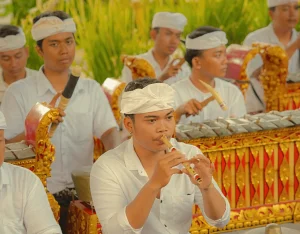
In Bali, gamelan rehearsals are not just about music. They are moments when the village gathers, where generations meet, and where cultural values are passed on in the most natural way.
But how does a simple musical practice become one of the strongest expressions of social harmony in Balinese culture?
Gamelan as the Social Pulse of the Village
In many Balinese villages, the gamelan pavilion functions like a communal heart. It is where people come together regardless of age or background. Younger players watch, imitate, and learn directly from older musicians, while senior members guide the group with patient expertise. Through this shared space, discipline, cultural knowledge, and mutual respect flow naturally from one generation to the next.
Because gamelan accompanies temple ceremonies, processions, religious festivals, and community celebrations, it becomes closely tied to the identity of the village itself. Each rehearsal prepares the community for moments of collective importance. In this way, gamelan is not only a musical ensemble it is a reflection of how the village breathes and stays connected.
Learning Through Listening: The Philosophy Behind Rehearsals
Inside a gamelan ensemble, harmony depends on attentive listening. No single instrument leads the group instead, each layer of sound supports the others. Players must stay aware of every rhythm around them, adjusting their beat to maintain balance.
This musical structure reflects core Balinese values of cooperation, shared responsibility, and unity. Beginners quickly realize that their contributions impact the entire ensemble. Older musicians model patience and precision, demonstrating how harmony is achieved not through competition, but through harmony and sensitivity.
Though rehearsals often feel informal, the lessons within them are profound. They teach coordination, emotional discipline, and the value of moving together as one skills that extend far beyond music.
The Community Spirit of Rehearsals
A gamelan rehearsal is also a social gathering. Conversations, light jokes, and small corrections blend seamlessly with the practice. This blend of seriousness and warmth strengthens bonds between villagers. Rehearsals become opportunities to reconnect, discuss upcoming ceremonies, and reinforce a sense of belonging.
Music and community responsibilities merge during these sessions. Many rituals begin with gamelan, so preparing for ceremonies naturally starts here. This connection between art and duty keeps the ensemble alive and relevant in village life. As a result, gamelan becomes a bridge uniting generations and preserving traditions without feeling forced or old-fashioned.
Bringing Village Harmony to the Stage at Sawelas Nusantara
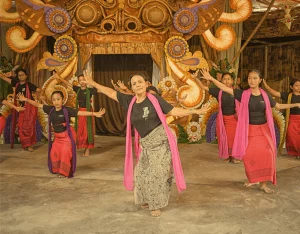
At Sawelas Nusantara, the spirit of village practice is authentically brought to the stage. The musicians practice with the same collaborative values found in the banjar, such as attentive listening, mutual support, and respect for the roots of the music’s culture.
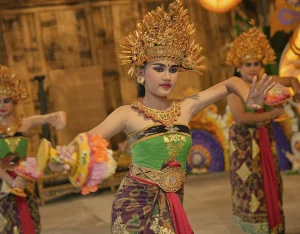
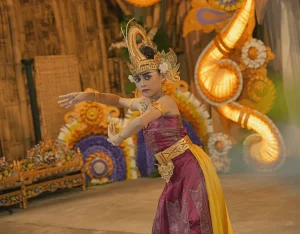
Visitors often feel as though they are experiencing a glimpse of village life the warmth, the togetherness, and the subtle communication between musicians. Gamelan at Sawelas is not treated as background accompaniment but as the core energy that connects dancers, performers, and audiences. Its rhythms echo the harmony of the village, bringing the communal soul of Bali into a modern cultural space.
📍 Visit us at Bali Collection, Jl. ITDC Nusa Dua Lot BC, Benoa, South Kuta, Badung, Bali.
📅 Check our Event Schedule and Experience the living rhythm of community where every note reflects unity, cooperation, and the cultural heart of Bali.
Gamelan becomes more than performance it becomes the rhythm of togetherness carried from the village to the stage.