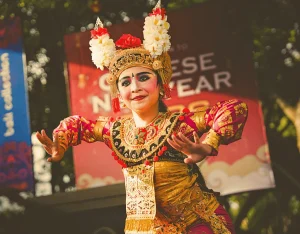
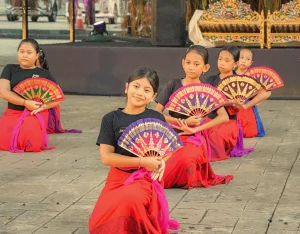
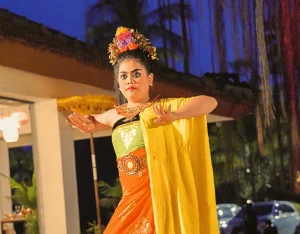
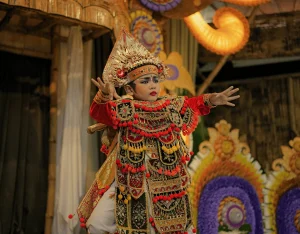
Dance is more than an art form it is a spiritual offering, a language of gratitude, and a celebration of harmony. Every movement reflects the island’s deep connection between humans, nature, and the divine. Among the many mesmerizing dances, Sekar Jagat and Sekar Jepun shine as graceful embodiments of beauty and unity. But what makes these two dances so special in Balinese culture?
The Meaning of Sekar Jagat: Flowers of the Universe
The name Sekar Jagat translates to “flowers of the universe.” In Balinese symbolism, flowers are not only decorations they are offerings that carry prayers, purity, and blessings. The dance reflects harmony among people from diverse backgrounds, embodying the idea that just as different flowers come together in a single arrangement, so too can humanity live in unity.
Traditionally performed as a welcoming piece, Sekar Jagat creates an atmosphere of openness and joy. The graceful gestures and warm energy of the dancers mirror Bali’s philosophy of Tri Hita Karana the balance between people, nature, and the spiritual realm. For guests, witnessing Sekar Jagat feels like receiving an invitation into Bali’s heart: a place where harmony is not only hoped for, but lived.
The Grace of Sekar Jepun: Inspired by the Frangipani
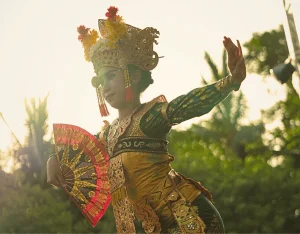
If Sekar Jagat embodies unity, then Sekar Jepun highlights purity and elegance. This dance takes inspiration from the frangipani flower (jepun in Balinese), a blossom that adorns daily offerings, temple ceremonies, and even dancers’ hair. The frangipani symbolizes devotion, sincerity, and timeless beauty values deeply cherished in Balinese culture.
With flowing steps and delicate hand movements, Sekar Jepun transforms the stage into a moving garden of blossoms. Dancers evoke the flower’s charm, reminding the audience of Bali’s natural abundance and spiritual essence. For the Balinese, the flower is more than just fragrance and beauty; it represents prayers whispered in silence, hopes carried with grace, and life’s fleeting yet precious nature.
More Than Performance: A Living Tradition
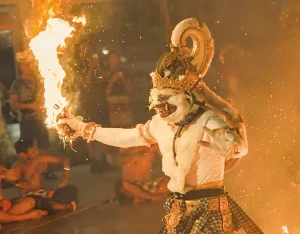
What makes Sekar Jagat and Sekar Jepun remarkable is that they are not limited to staged shows. They are living traditions performed in temple courtyards, community gatherings, and seasonal festivals. Their presence is both aesthetic and spiritual: every gesture carries meaning, every step becomes a prayer.
This is where Balinese dance differs from many global performance arts. While dance elsewhere may be viewed as entertainment, in Bali it is inseparable from devotion. The dancers are not merely performers they are channels through which beauty, gratitude, and harmony flow into the community. For visitors, to watch these dances is to glimpse Bali’s soul in motion.
Experiencing the Dances at Sawelas Nusantara
At Sawelas Nusantara, these traditional dances are performed with dedication and artistry at Bali Collection in Nusa Dua. Visitors can immerse themselves in the beauty of Sekar Jagat and Sekar Jepun as part of an authentic cultural experience. Surrounded by live gamelan music and the vibrant energy of performance, the audience is invited to connect with the essence of Balinese tradition.
By attending a performance at Sawelas, you don’t just watch a dance you step into a cultural journey where every gesture tells a story of harmony, gratitude, and grace.
📍 Visit Sawelas Nusantara at Bali Collection, Jl. ITDC Nusa Dua Lot BC, Benoa, South Kuta, Badung, Bali.
📅 Check our event schedule and experience the spiritual energy of Bali expressed through dance and music.
Witness the timeless beauty of Bali’s traditional dances where art becomes a living expression of harmony and beauty.