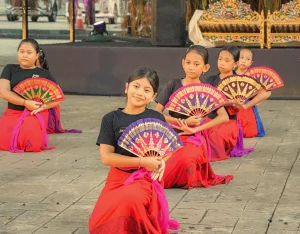
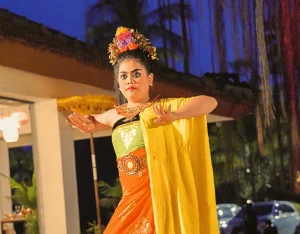
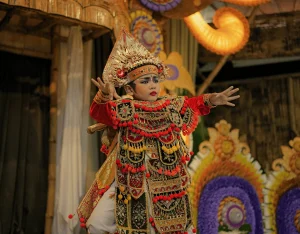
As the curtain rises in Bali, it is not just a performance that begins it is a story reborn. From temple courtyards to international stages, the island continues to breathe life into its timeless tales. Myths of gods and demons, stories of love and virtue, and epic battles between light and darkness all are retold through dance, shadow, and sound. What keeps an ancient island’s stories alive flowing through every movement, melody, and expression?
The Origins of Storytelling in Balinese Culture
Long before written words shaped history, Balinese storytellers carried wisdom through performance. The wayang kulit shadow puppetry illuminated by flickering oil lamps was once the sacred stage where philosophy met poetry. Kidung (sung verses) and tari topeng (mask dance) followed, each blending narrative and ritual into one seamless art form.
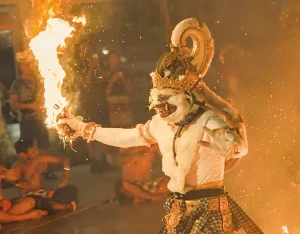
These were not stories for entertainment alone, they were lessons and prayers, reflections on the balance of the universe. Through tales drawn from Ramayana, Mahabharata, and local myths, storytellers became guardians of moral order. Every hero’s triumph and every demon’s fall reminded audiences of the eternal dance between dharma (righteousness) and adharma (chaos).
In these traditions, storytelling was not just about words it was about rhythm, movement, and soul.
Myths and Morals: Messages Hidden in the Dance
Each story in Balinese culture holds layers of meaning. Behind every battle scene lies a lesson in courage and restraint, behind every love story, a meditation on devotion and balance. These myths are moral mirrors teaching that strength without virtue brings ruin, and humility brings peace.
The Ramayana and Mahabharata were adapted not as literal retellings, but as spiritual dramas reflecting life’s constant struggle for harmony. Dancers, puppeteers, and musicians embody these lessons, transforming moral philosophy into living art.
Even today, as the gamelan hums and the dancers’ eyes tell stories of gods and mortals, the ancient messages remain timeless: that good and evil, light and shadow, must coexist to sustain the world’s balance.
From Temple Courtyards to the Global Stage
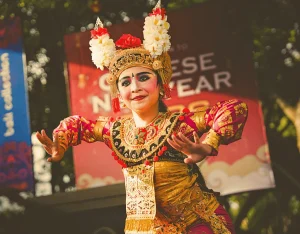
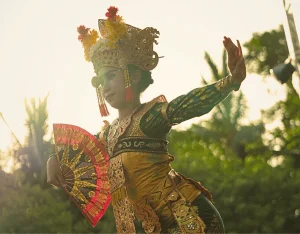
Traditional performances once meant for temple ceremonies now grace global stages from cultural festivals to international collaborations. The essence remains the same to share the beauty of Balinese philosophy through art that speaks beyond words. In modern adaptations, the sacred and contemporary coexist. Dancers blend classical gestures with innovative choreography; musicians weave ancient gamelan tones into new harmonies. Yet, at the heart of it all, the purpose endures to keep the stories breathing, evolving, and resonating with every generation.
This is how Bali sustains its legacy not by preserving the past in silence, but by retelling it with living breath.
Sawelas Nusantara: The Storytellers of Today
At Sawelas Nusantara, the ancient tradition of storytelling finds new life. The stage becomes a bridge between myth and modernity where classic Balinese tales are reimagined for contemporary audiences, yet their soul remains pure. Each performance is more than movement it is narration through rhythm and emotion. The dancers become storytellers, carrying the voices of their ancestors through every gesture and gaze.
Themes of love, balance, and resilience echo through the choreography, reminding viewers that these are not just tales of the past they are reflections of life itself.
Sawelas Nusantara is, in essence, the living storyteller of Bali keeping the island’s spiritual and cultural memory alive through art that transcends language and time.
📍 Visit us at Sawelas Nusantara at Bali Collection, Jl. ITDC Nusa Dua Lot BC, Benoa, South Kuta, Badung, Bali.
📅 Check our Event Schedule and witness how Bali’s timeless stories continue to speak through movement, music, and soul.
Myth becomes melody, and stories find their voice once more retold through grace, devotion, and the rhythm of the island.