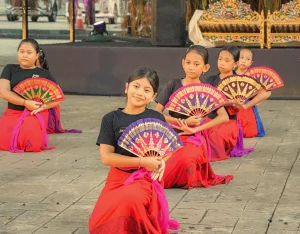
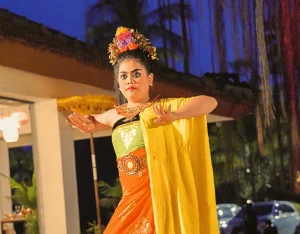
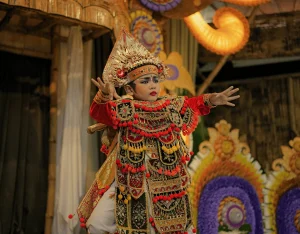
In Bali, the day often begins with quiet beauty the scent of incense rising with the morning breeze, women preparing banten with delicate hands, children adjusting their temple attire, and the faint echo of gamelan flowing from a village bale banjar. Here, ceremonies are not occasional events. They are the pulse that organizes life, the rhythm that guides the island’s people from one sacred moment to the next. For the Balinese, a ceremony is more than ritual. It is harmony in motion a timeless expression of gratitude, protection, and cosmic balance. But why are ceremonies the heartbeat of Bali’s culture, shaping everything from daily offerings to grand temple festivals?
The Spiritual Foundations of Ceremony
Ceremonies in Bali are grounded in two key philosophies Tri Hita Karana and Rwa Bhineda. Tri Hita Karana teaches that harmony can only exist when humans live in balance with God, with one another, and with nature. Every offering, prayer, and gesture in a ceremony is a way of nurturing these relationships.
At the same time, Rwa Bhineda explains the coexistence of opposing forces good and bad, light and darkness, softness and strength. In the Balinese worldview, these dualities are not enemies but partners that keep the universe aligned.
Ceremonies in Every Stage of Life
From the moment a child enters the world to the moment a soul is released back to the cosmos, every life stage in Bali is honored through ceremony. The Three Month Ceremony welcomes infants into the human realm. Metatah teaches the transition into emotional and spiritual maturity. Weddings bind two families with ancestral blessings. Ngaben sends the spirit peacefully toward liberation.
These rituals provide structure, meaning, and spiritual guidance throughout life. They also become living classrooms where younger generations learn about respect, discipline, devotion, and cultural identity. Through ceremony, values are not merely taught they are lived and experienced together.
How Ceremonies Sustain Community Harmony
Ceremonies do more than strengthen spirituality they hold the social fabric of the community together. Preparations always take place collectively: neighbors gather to create offerings, decorate the temple, rehearse gamelan, cook for the village, or purify the space. This cooperative spirit reinforces trust, unity, and shared responsibility.
Banjar activities during major celebrations such as Odalan, Galungan, and Kuningan transform the community into one interconnected family. Through these shared efforts, traditions stay alive and social harmony is continually renewed. For the Balinese, ceremonies are not just rituals they are the foundation of community life.
Experiencing Bali’s Living Ceremonies Through Sawelas Nusantara
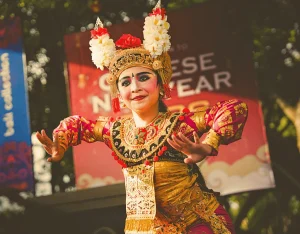
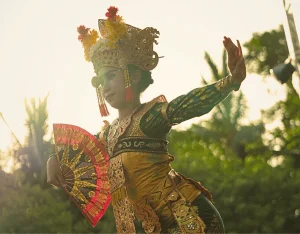
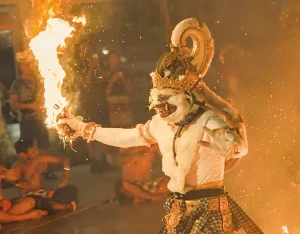
At Sawelas Nusantara, the spirit of ceremony is brought to the stage through dance and music that reflect Bali’s sacred values. Many performances draw inspiration from ceremonial themes purification, welcome, gratitude, and balance. The movements, expressions, and rhythms allow visitors to feel the essence of ritual, even outside the temple grounds.
Rather than presenting dance as entertainment alone, Sawelas Nusantara offers audiences a glimpse into the heartbeat of Balinese culture: the devotion, the artistry, and the spiritual harmony that flow through every traditional ceremony.
📍 Visit us at Bali Collection, Jl. ITDC Nusa Dua Lot BC, Benoa, South Kuta, Badung, Bali.
📅 Check our Event Schedule and Discover why ceremonies are the living heartbeat of Bali and how their spirit flows through every performance.
In Bali, every ceremony is a reminder to live with gratitude and harmony.