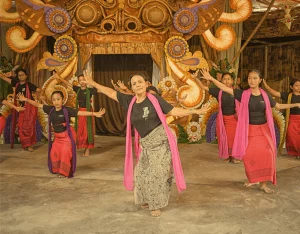
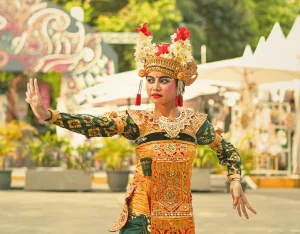
Learning a traditional dance is more than memorizing steps it is an invitation to enter another culture’s way of seeing, feeling, and expressing the world. In Bali, where dance reflects spirituality, community, and ancestral memory, the experience becomes even more profound. When travelers learn Balinese dance, they begin to understand the island not only through observation, but through movement that carries history and meaning in every gesture.
But how does learning traditional dance open a pathway toward deeper cross cultural understanding?
Embodying Culture Through Movement
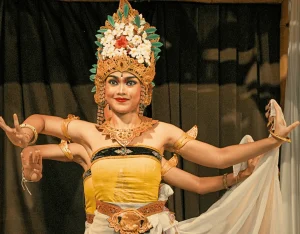
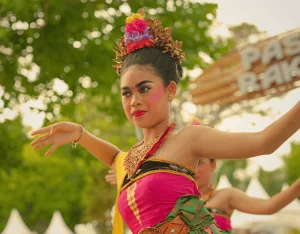
Traditional dance is shaped by the values, beliefs, and stories of the people who created it. In Bali, every movement from the curve of the fingers to the grounding of the feet expresses something meaningful. When learners imitate these gestures, they are not just copying physical forms; they are stepping into the cultural language of the Balinese people.
Through practice, students begin to realize how posture reflects respect, how rhythm mirrors nature, and how expression communicates emotion without speaking. Movement becomes a mirror that reveals the island’s philosophy harmony, devotion, and awareness. By embodying these values, learners gain insight that cannot be attained through watching alone they feel Bali through their own bodies.
Dance as a Pathway to Empathy and Understanding
Learning a traditional dance requires patience, openness, and humility qualities that naturally foster empathy. As learners experience the difficulty, discipline, and precision required in each gesture, they gain newfound appreciation for the artists who have preserved the tradition for generations. This process breaks down stereotypes and builds respect.
In the dance space, cultural barriers soften. Students from different countries and backgrounds move together, learning the same gestures, listening to the same rhythms, and supporting one another. The room becomes a shared cultural moment, where differences become irrelevant and curiosity replaces distance. Through dance, people begin to understand each other not through language, but through experience.
Why Cross Cultural Learning Feels Natural in Bali
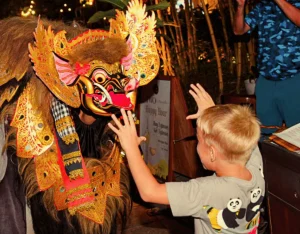
Bali is a place where the arts are alive performed in temples, practiced in homes, and taught across generations. Its cultural warmth creates an environment where learning feels natural, open, and welcoming. Teachers pass down not only technique, but also stories, context, and spiritual significance. This makes each lesson feel personal and meaningful.
Travelers quickly notice that Balinese dance is not simply choreography it is a reflection of identity and connection to the divine. When visitors learn even a small sequence, they often describe feeling more connected to the island, its people, and its traditions. Bali’s openness, community spirit, and artistic richness make it the perfect landscape for cross-cultural learning.
A Cultural Learning Space for Travelers
At Sawelas Nusantara, learning traditional dance becomes a memorable experience for visitors from around the world. Through guided workshops, learners explore the foundations of Balinese movement. This approach creates meaningful encounters between travelers and local artists. Learners feel welcomed, supported, and inspired as they connect with Bali through motion. Sawelas becomes a place where culture is not only performed it is shared, lived, and passed on with warmth and sincerity.
By learning traditional dance, travelers gain a deeper appreciation for Bali’s heritage. They leave with more than new skills; they leave with understanding an emotional connection that bridges cultures and nurtures mutual respect.
📍 Visit us at Bali Collection, Jl. ITDC Nusa Dua Lot BC, Benoa, South Kuta, Badung, Bali
📅 Check our Event Schedule and experience how learning Balinese dance opens a window into the heart of the island.
When we learn another culture’s movement, we learn to feel their world